
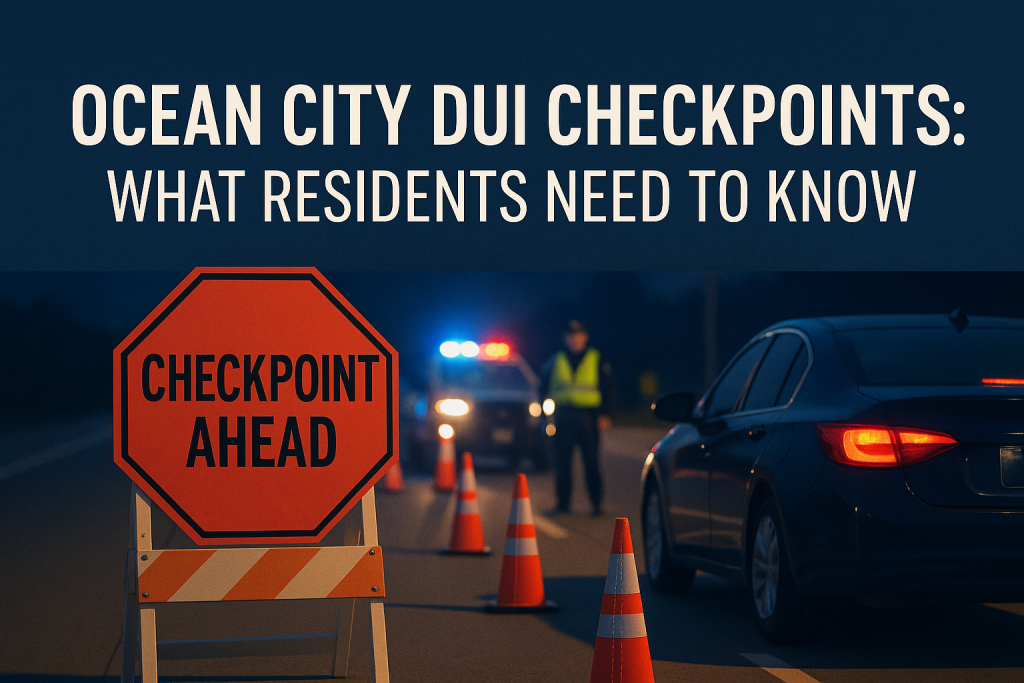
I. Understanding DUI Checkpoints
What is a DUI Checkpoint?
A DUI checkpoint, also called a sobriety checkpoint, is a temporary stop set up by police to check if drivers are under the influence of alcohol or drugs. It might feel like a trap, but it’s meant to keep roads safe. Officers stop cars using a set pattern, like every third vehicle, and look for signs that a driver may have been drinking.
The main goals of DUI checkpoints are:
- To stop drunk driving
- To catch drivers who are impaired
- To help keep the public safe
After all, no one wants an accident near the beach at 2 a.m.
When and Where Are DUI Checkpoints Set Up?
Ocean City police usually plan checkpoints during busy times, such as:
- Holiday weekends (like Memorial Day, July 4th, and Labor Day)
- Spring Break or Senior Week
- Special events, like Cruisin’ Week or Bike Week
Common spots for checkpoints include:
- Coastal Highway (especially in the midtown area)
- Route 50 at the bridge
- Ocean Gateway coming into town
- Philadelphia Avenue
- Roads in West Ocean City near bars and resorts
Police might post about these checkpoints online or in the news, but sometimes they keep the locations a surprise.
II. Are DUI Checkpoints Legal in Maryland?
Maryland DUI Checkpoint Laws
Yes, DUI checkpoints are legal in Maryland, but the police must follow certain rules:
- They should try to let the public know in advance
- They must use a fair method to stop cars, like every fourth vehicle—not just random ones
- The plan must come from supervisors—not officers making it up as they go
Your 4th Amendment Rights
The 4th Amendment of the U.S. Constitution protects people from unreasonable searches. Courts have said that if checkpoints are done right, they’re allowed because safety is more important than a short delay.
Two key court cases:
- Michigan Dept. of State Police v. Sitz (1990): The Supreme Court said DUI checkpoints are legal as long as they’re done fairly.
- Ingersoll v. Palmer (1987): This case gave clear rules about how checkpoints should be set up and run.
So, yes, they’re legal—but only if police follow the rules, which doesn’t always happen.
III. What to Expect at a Checkpoint
Wondering what happens when you’re stopped at a DUI checkpoint? Here’s what usually goes on:
- You’ll see warning signs, cones, and flashing lights.
- An officer will walk up and ask for your license and registration.
- They’ll likely ask, “Have you had anything to drink tonight?”
- The officer looks for signs that you may be drunk or high—like slurred speech or trouble focusing.
- If they think you might be impaired, they’ll ask you to pull over for more checks.
- You might be asked to do field sobriety tests, like walking a straight line.
- You could also be asked to take a breath test (a breathalyzer).
- If you refuse the test, there could be consequences—more on that below.
- If you’re arrested, the officer will read you your rights and take you to the station.
- You could be charged with DUI—unless, of course, you call a good lawyer right away.
IV. What Are Your Rights at a DUI Checkpoint?
Even at a checkpoint, you still have rights. Here are 10 important rights to remember:
- You have the right to stay silent. You don’t have to say where you’re going or where you’ve been.
- You can say no to a car search unless the officer has a good reason to do it.
- You can refuse to answer questions that you’re not comfortable with.
- You can record the stop with your phone, as long as you’re not interfering.
- You can legally turn around before a checkpoint if you obey traffic laws.
- You do have to give your license and registration when asked.
- You can ask for a lawyer if you are arrested or detained.
- Be respectful and calm—it always helps.
- You do not have to do field sobriety tests. They’re voluntary (and often unreliable).
- You can ask, “Am I free to leave?” If yes, go calmly. If no, you’re being detained.
V. Common Myths About DUI Checkpoints
There’s a lot of bad advice out there. Let’s clear up some of the most common myths:
- “DUI checkpoints are illegal in Maryland” – False. They are legal as long as rules are followed.
- “You must answer every question” – False. You can choose to remain silent.
- “Refusing a breath test has no effect” – False. It can lead to losing your license.
- “You must do field sobriety tests” – False. These tests are optional.
- “Passengers have no rights” – False. Everyone has constitutional rights.
- “Getting stopped means you’ll be arrested” – False. Only if police find a reason.
- “It’s illegal to avoid a checkpoint” – False. Not if you do it safely.
- “Police don’t record everyone” – False. Body and dash cams can record the whole stop.
- “Warning others about checkpoints is illegal” – False. Free speech protects you.
- “You can’t be arrested if your BAC is under 0.08” – False. You can still be arrested if you appear impaired.
VI. How Ocean City Residents Can Prepare
Avoiding legal trouble isn’t just about knowing your rights—it’s about being smart. Here’s how to stay safe:
- Don’t drink and drive. It’s the best way to stay out of trouble.
- Learn when checkpoints tend to happen, like holidays or weekends.
- Use apps like Waze to hear about checkpoints or traffic stops.
- If you’ve been drinking, use a cab, Uber, or ride with a sober friend.
- Try to travel during times that are not busy or targeted for checkpoints.
- Make sure your license, insurance, and registration are all up to date.
- Teach your friends and family about this info—especially teens and new drivers.
- Never speed away from a checkpoint—it will only make things worse.
- Keep your car in good shape. Broken taillights or expired tags can get you pulled over.
- Save a lawyer’s phone number just in case you need help fast. (410) 723-6500
Final Thoughts from Attorney Cullen Burke
DUI checkpoints are a regular part of life in Ocean City, especially when the streets are full of visitors. They’re meant to protect everyone—but they can also lead to big problems if you’re not careful or don’t know your rights.
With over 30 years of experience helping people with DUI and other charges, I know how fast a simple mistake can turn into something bigger. Whether you’re a resident or just visiting for the weekend, don’t let one bad moment ruin your future.
If you or someone you care about needs legal help after a DUI arrest, I’m ready to fight for you. I’ll explain everything, keep you informed, and work hard to get the best outcome possible.
Questions? Worried? Just want to be ready?
Contact Attorney Cullen Burke
Website: CullenBurke.com
Phone: Call (410) 723-6500
